
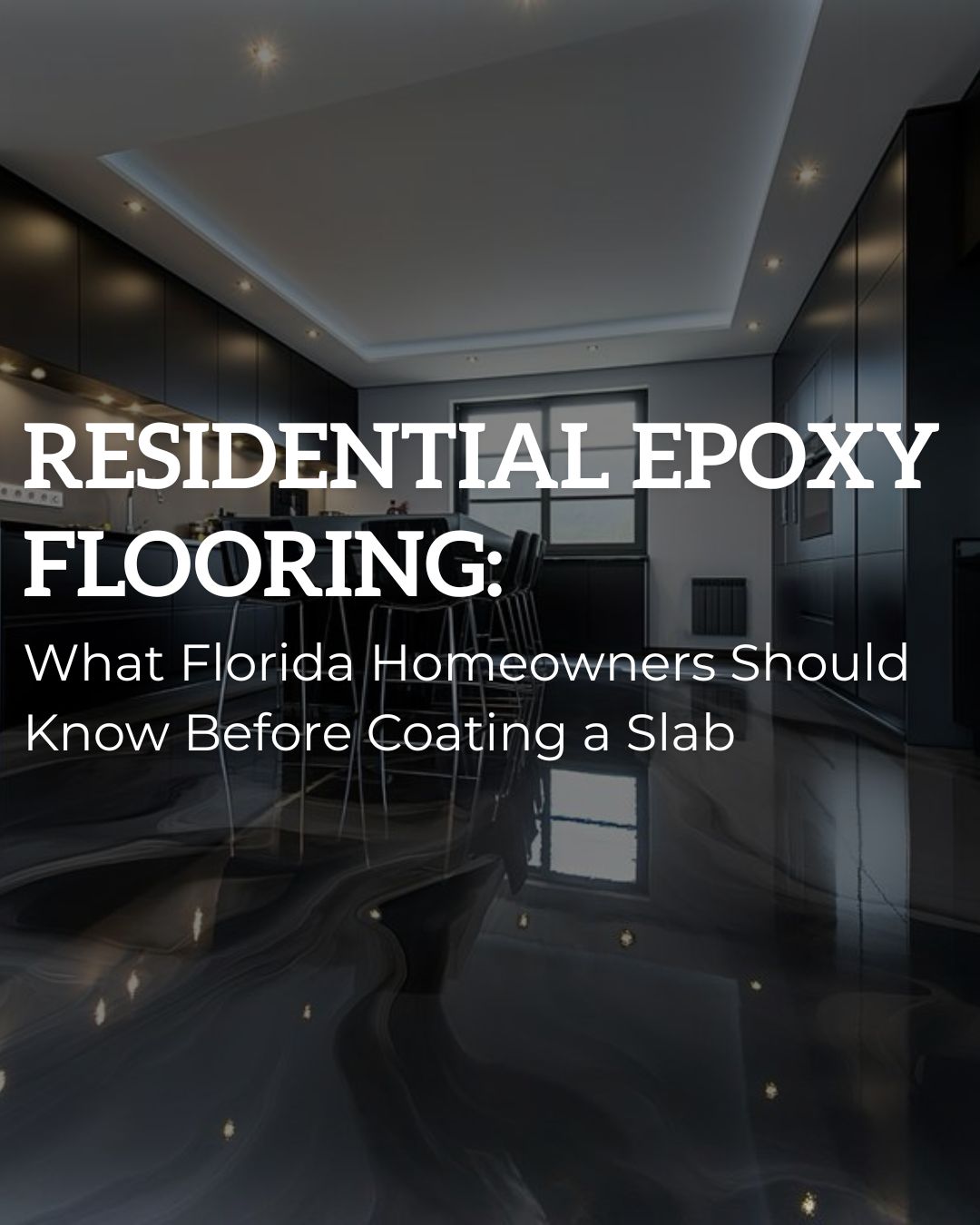
Residential epoxy flooring is a multi-layer coating bonded directly to prepared concrete, used in garages, patios, lanais, pool decks, sunrooms, and interior rooms. Cost depends on square footage, slab condition, and the finish selected. Proper surface preparation and moisture testing matter far more to the result than the product itself.
Why Homeowners Coat Their Concrete Instead of Covering It
Bare concrete in a Florida home rarely stays presentable for long. Oil drips settle into the garage slab, hairline cracks spread, patios grey out under the sun, and pool decks pick up stains that no amount of pressure washing fully removes. Covering it with tile or carpet solves the appearance and creates new problems with moisture, grout, and replacement cost.
Residential epoxy flooring takes the opposite approach: it seals and finishes the slab you already own. This guide walks through where an epoxy floor makes sense at home, what actually drives residential epoxy flooring cost, how the installation sequence works, how the finish holds up in Gulf Coast conditions, and the warning signs of a job that will fail early. If you are already comparing residential epoxy flooring services in Florida, the sections below will help you ask sharper questions before you sign anything.
What Residential Epoxy Flooring Is and How the System Is Built
Residential epoxy flooring is a two-part coating, resin plus hardener, applied over a mechanically prepared concrete slab. The mixture cures through a chemical reaction rather than simply drying, which is why it bonds into the concrete surface instead of sitting on top of it like paint.
A professional epoxy floor residential system is built in layers rather than applied as a single coat:
- Prepared slab — ground open so the coating has a mechanical profile to grip
- Primer or base coat — seals the concrete and establishes the bond
- Decorative layer — pigment, vinyl flake, quartz aggregate, or metallic effect
- Clear topcoat — carries the wear, the gloss level, and the slip resistance
That layered build is the practical difference between a coating that lasts and one that lifts. A hardware-store kit typically compresses all of this into one thin product applied over concrete that was etched with acid rather than ground, which is where most peeling failures begin.
Which Areas of a Florida Home Suit an Epoxy Floor
Monarch Epoxy Florida installs residential epoxy floors in garages, patios, pool decks, sunrooms, basements, laundry rooms, and interior living areas. Each of those spaces asks something slightly different from the coating.
Garages and Workshops
The garage is the most common starting point, and the most demanding. Hot tires, dropped tools, oil and brake fluid, and a slab that never sees climate control all work against a finish. A properly installed coating resists chemical staining and cleans up with a mop rather than a scrub brush. Homeowners focused specifically on this space can read more about professional garage floor epoxy coatings.
Lanais, Patios, and Pool Decks
Outdoor and semi-outdoor surfaces need two things that indoor floors do not: slip-resistant texture for wet feet, and a UV-stable topcoat so the color does not yellow or chalk under direct sun. Monarch adds slip-resistant texture for wet and poolside areas and uses UV-stable topcoats on these installs. A high-gloss interior finish specified for a pool deck is a mismatch, not an upgrade.
Interior Rooms, Sunrooms, and Laundry Areas
Inside the house, the appeal shifts toward appearance and cleaning. Seamless flooring has no grout lines to scrub and no carpet to replace, which suits laundry rooms, sunrooms, and open living areas where a decorative metallic or flake finish can carry the room visually.
Epoxy is not the right answer for every surface. Slabs with active water intrusion, structural cracking, or persistent moisture drive need those issues resolved before any coating goes down. An installer worth hiring will say so during the inspection rather than coating over the problem.
What Determines Residential Epoxy Flooring Cost
Residential epoxy flooring cost depends on square footage, the condition of the existing concrete, and the finish you choose. Monarch Epoxy Florida provides a free, no-obligation quote on every project, so the figure is known before work starts rather than estimated from a website.
The variables that move a quote up or down are worth understanding, because they explain why two bids on the same garage can differ significantly:
- Square footage — larger areas usually carry a lower rate per square foot
- Slab condition — cracks, pitting, spalling, and old coatings all add preparation labor
- Moisture readings — a slab with high vapor drive may need a mitigating primer
- Finish system — solid color, flake, quartz, and metallic differ in material and labor
- Layout and detail work — edges, steps, thresholds, and obstructions slow a crew down
- Old flooring removal — tile, carpet adhesive, or a failed coating must come off first
Why a Low Residential Epoxy Flooring Price Can Cost More Later
The cheapest bid is often cheap because preparation was reduced. Acid etching instead of diamond grinding, skipping moisture testing, or thinning the topcoat are all invisible on handover day and expensive eighteen months later, since a failed coating has to be ground off before anything new can be installed. When you compare quotes, compare what preparation each one includes, not just the bottom line.
How a Residential Epoxy Floor Is Installed, Step by Step
Monarch Epoxy Florida follows a consistent sequence on residential work: a free in-home consultation to look at the space and discuss color and style, a complimentary design concept with a clear written quote, then professional installation overseen by a dedicated project manager from surface prep through final topcoat.
Surface Preparation and Moisture Testing
Preparation determines the outcome. The slab is diamond ground to open the surface, cracks and imperfections are repaired, and moisture levels are tested before any coating is applied. In a humid climate, moisture pushing up through a slab is a leading cause of adhesion failure, which is why testing is a step rather than a formality.
Base Coat, Decorative Layer, and Topcoat
Once the concrete is ready, the base coat is applied, followed by the decorative element and a clear protective topcoat. Flake is broadcast into the wet base and the excess scraped back before sealing; metallic pigment is worked while the resin is still moving. Both are time-sensitive, which is one reason crews work to a schedule rather than a leisurely pace.
When You Can Use the Floor Again
According to Monarch Epoxy Florida, most epoxy floor coatings are dry within 24 hours, safe for foot traffic in one to two days, and fully cured within five to seven days. Most homes are completed in as little as one day of installation, with larger areas or multi-coat decorative finishes taking longer. Vehicles should stay off the surface until the installer confirms full cure, since driving on a floor that is walkable but not cured is a common way to mark a new finish.
Choosing a Finish: Flake, Metallic, Quartz, and Solid Colour
Finish selection is partly aesthetic and partly practical. A quick comparison:
- Decorative flake — multi-tone chips that hide dust and minor imperfections; the usual choice for garages
- Metallic — a marbled, reflective look with depth; popular in feature rooms and showpiece garages
- Quartz — colored aggregate that adds texture and grip, suited to wet areas
- Solid color — clean and contemporary, the easiest to keep looking uniform in a utility space
Reviewing the epoxy pigment, flake, and quartz color charts before your consultation makes the design conversation far more productive, since it is easier to point at a blend than to describe one. Homeowners planning a wider refresh often pair floor work with custom epoxy countertop coatings to keep finishes coordinated.
How Florida Heat and Humidity Affect Residential Epoxy Floors
Coastal conditions put specific pressure on a coating. Salt air, standing humidity, intense UV exposure on outdoor slabs, and daily temperature swings all test the bond and the topcoat. Monarch Epoxy Florida states that its residential systems begin with moisture testing and surface prep and use UV-stable coatings engineered for these conditions.
Two details matter most locally. Slab moisture has to be measured rather than assumed, because Florida slabs frequently sit on damp ground with limited vapor barriers. And any surface with sun exposure needs a UV-stable topcoat, or the finish will amber over time regardless of how well it was installed.
Keeping a Residential Epoxy Floor Looking New
Upkeep is minimal, which is much of the appeal. Routine care is a sweep and an occasional mop with a mild cleaner. There is no grout to scrub, no carpet to replace, and no seasonal resealing of the kind bare concrete and pavers require.
- Sweep grit regularly, since fine sand acts as an abrasive underfoot
- Wipe automotive fluids promptly rather than letting them sit
- Use furniture pads and lift heavy items instead of dragging them
- Place mats at entry points where sand and grit come in
Monarch Epoxy Florida notes that a properly installed residential epoxy floor typically lasts 15 years or more with routine sweeping and mopping. If you are weighing whether an additional protective layer is worth it, our post on what kind of sealer to use on an epoxy garage floor covers that decision in detail.
Mistakes That Cause Epoxy Floors to Peel or Fail Early
Most coating failures trace back to a short list of decisions made before the first bucket is opened:
- Acid etching instead of mechanical grinding, leaving the coating nothing to key into
- Skipping moisture testing on a slab with vapor drive
- Coating over an existing failed product rather than removing it
- Applying a high-gloss interior topcoat to a wet outdoor area
- Parking on the floor before it has reached full cure
- Choosing a contractor on price alone without confirming what prep is included
Ask any installer three questions before hiring: how will you prepare the slab, will you test for moisture, and what topcoat are you using. Clear answers to those tell you more than a portfolio does.
DIY Kits Versus Professional Epoxy Flooring Installation
Retail kits have a place. For a small laundry room, a rental, or a slab where expectations are modest and the budget is fixed, a kit can be a reasonable choice. The limitations are real, though: kits are generally thinner, rely on chemical etching rather than grinding, offer limited working time, and do not include moisture mitigation.
Professional installation becomes the better economics as the space grows and the slab gets harder to read. Grinding equipment, moisture meters, and experience judging ambient conditions during application are difficult to replicate on a weekend, and a coating that fails has to be removed before a second attempt.
Finding a Residential Epoxy Flooring Installer on the Gulf Coast
Monarch Epoxy Florida is a licensed and insured epoxy contractor headquartered in Bradenton, installing residential epoxy floor coatings for homes across the region. Homeowners comparing [PRIMARY KEYWORD] options in a particular city can review local services and project details on our epoxy flooring in Bradenton, FL page, or the equivalent page for [LOCATION KEYWORD].
Coverage includes Sarasota, Bradenton, Lakewood Ranch, Tampa, Venice, and North Port. Hiring locally has a practical benefit beyond convenience: a crew that works on Gulf Coast slabs regularly knows how these concrete conditions behave and how the weather affects an install day.
Homeowners who also run a business from a workshop, storage building, or retail unit can find heavier-duty specifications under our commercial epoxy flooring solutions, which use thicker formulas built for equipment loads and constant traffic.
Frequently Asked Questions About Residential Epoxy Flooring
How much does residential epoxy flooring cost in Florida?
Residential epoxy flooring cost depends on square footage, the condition of the concrete, and the finish selected. Monarch Epoxy Florida provides a free, no-obligation quote on every project, so the exact residential epoxy flooring price is confirmed before any work begins.
How long do residential epoxy floors last?
Monarch Epoxy Florida states that a properly installed residential epoxy floor typically lasts 15 years or more in Florida conditions, with routine sweeping and mopping. Longevity depends heavily on the quality of the surface preparation underneath and how the space is used.
How long does installation take, and when can I use the floor?
Most homes are completed in as little as one day, with larger or multi-coat decorative finishes taking longer. The company advises that coatings are generally dry within 24 hours, safe for foot traffic in one to two days, and fully cured within five to seven days.
Can epoxy flooring be installed on patios and pool decks?
Yes. Residential epoxy floor coatings are regularly applied to patios, lanais, pool decks, and sunrooms using slip-resistant, UV-stable systems designed for moisture, sun exposure, and bare feet. The specification differs from an interior floor, so confirm the topcoat suits outdoor use.
Will an epoxy floor crack or peel in Florida heat?
Not when it is installed correctly. Monarch Epoxy Florida begins residential projects with moisture testing and surface preparation, then uses UV-stable, flexible coatings engineered for Florida heat, humidity, and temperature swings. Most peeling traces back to inadequate preparation rather than the climate itself.
What is the difference between residential and commercial epoxy flooring?
Residential epoxy flooring uses finishes and thicknesses tuned for homes, prioritizing appearance, comfort, and easy cleaning. Commercial systems use heavier formulas built for machinery, equipment loads, and constant foot traffic. Both are durable; the system is matched to how the space is actually used.
Can epoxy be applied over cracked concrete or existing tile?
In most cases, yes. The surface is inspected first and prepared appropriately, whether that means grinding cracked concrete or removing old flooring, to achieve a sound bond. Slabs with structural problems or active moisture intrusion need those issues addressed before coating.
Deciding Whether an Epoxy Floor Fits Your Home
Residential epoxy flooring gives Florida homeowners a way to make a worn slab genuinely usable, sealing the concrete, hiding old staining, and producing a surface that cleans with a mop rather than a machine. The finish you choose shapes how the room looks; the preparation underneath decides how long it lasts, which is why the contractor matters more than the product name.
Monarch Epoxy Florida installs residential epoxy floors for homes across Bradenton, Sarasota, Lakewood Ranch, Tampa, Venice, and North Port, starting with a free in-home consultation, a design concept with color options, and a clear written quote. To find out what your slab needs and what it would cost, request a free residential epoxy flooring estimate and have the concrete assessed before you commit.